



A meeting at the Juniper Networks office in Amsterdam brought together SMMHub and Juniper Networks representatives to discuss current and future opportunities in Armenia, technology, customer needs, and an issue that goes far beyond individual projects: developing stronger local Juniper expertise.
There are business meetings that revolve around a single project.
There are meetings about pricing, delivery timelines, specifications or the next opportunity in the pipeline.
And then there are conversations where the discussion becomes broader.
What can we build next?
What does the market actually need?
And what needs to happen today to create stronger technological capabilities tomorrow?
On September 18, representatives of SMMHub LLC met with the Juniper Networks team at the company's office in Amsterdam.

SMMHub was represented by Lida Nalbandyan, Founder & CEO of SMMHub LLC, and Ara Sargsyan, B2B Director of SMMHub LLC.
From Juniper Networks, the meeting was attended by Ivan Iashagashvili, Senior Director, CEE and CIS; Iryna Voblaia, Territory Account Manager; and Dmitry Zavelskiy, Technical Engineer.
But the most important part of the meeting was not where it took place.
It was what the conversation was about.
Not Just Today's Projects — Tomorrow's Opportunities
A significant part of the discussion focused on existing initiatives and potential future projects that can be developed and implemented in Armenia.
The Armenian technology market is evolving.
Organizations are becoming increasingly dependent on the reliability, security and scalability of their digital infrastructure. Networks are no longer simply the layer that connects devices.
They connect employees.
Applications.
Data centers.
Cloud environments.
Security systems.
Customers.
And, increasingly, AI-driven workloads and services.
This means that infrastructure decisions made today can affect an organization's capabilities for years.
For an IT integrator, therefore, the question cannot simply be:
“What equipment does the customer need?”
The more important question is:
“What is the customer trying to build — and what infrastructure will allow it to work reliably not only today, but tomorrow?”
That perspective formed an important part of the conversation in Amsterdam.
Current opportunities were discussed, but so was the potential for future projects with Armenian customers and organizations.
Technology Is Important. Understanding Where It Fits Is More Important.
Another major part of the meeting was dedicated to the Juniper Networks portfolio and the technological characteristics of its solutions.
The discussion covered Juniper's approach to modern networking, the capabilities and differentiators of its technologies, and their positioning within a market where customers today have multiple global technology platforms to choose from.
And that competition is important.
Enterprise customers should compare.
They should ask difficult questions.
They should evaluate architecture, performance, scalability, security, manageability, support, lifecycle and total cost.
An integrator should be able to explain not only what a vendor offers, but also:
Why this architecture?
Where does it have an advantage?
For which environment is it appropriate?
What does it change operationally for the customer?
And equally importantly:
Where might another approach make more sense?
Because mature technology consulting is not about placing a product into every project.
It is about understanding where a technology creates real value.
But One Part of the Conversation Was More Important Than Products
Hardware can be delivered.
Software can be licensed.
Technology can be purchased.
Expertise cannot be shipped in a box.
And this became one of the most important subjects of our discussion.
If Armenia wants increasingly sophisticated technology environments, the country also needs people capable of designing, deploying, operating and developing them.
A sophisticated networking platform in the hands of an insufficiently prepared team will never deliver the same value as that technology supported by strong local expertise.
This is why the conversation turned toward technical education and the further development of Juniper Networks expertise among specialists in Armenia.
How can engineers gain deeper knowledge of Juniper solutions?
How can technical teams become more familiar with the architecture behind those solutions?
How can local specialists gain the competence necessary not simply to install technology, but to understand it?
And how can stronger technical expertise support a broader and more professional presence of Juniper solutions in the Armenian market?
These questions matter.
Because a technology market does not mature simply because more products become available.
It matures when the knowledge surrounding those products becomes local.
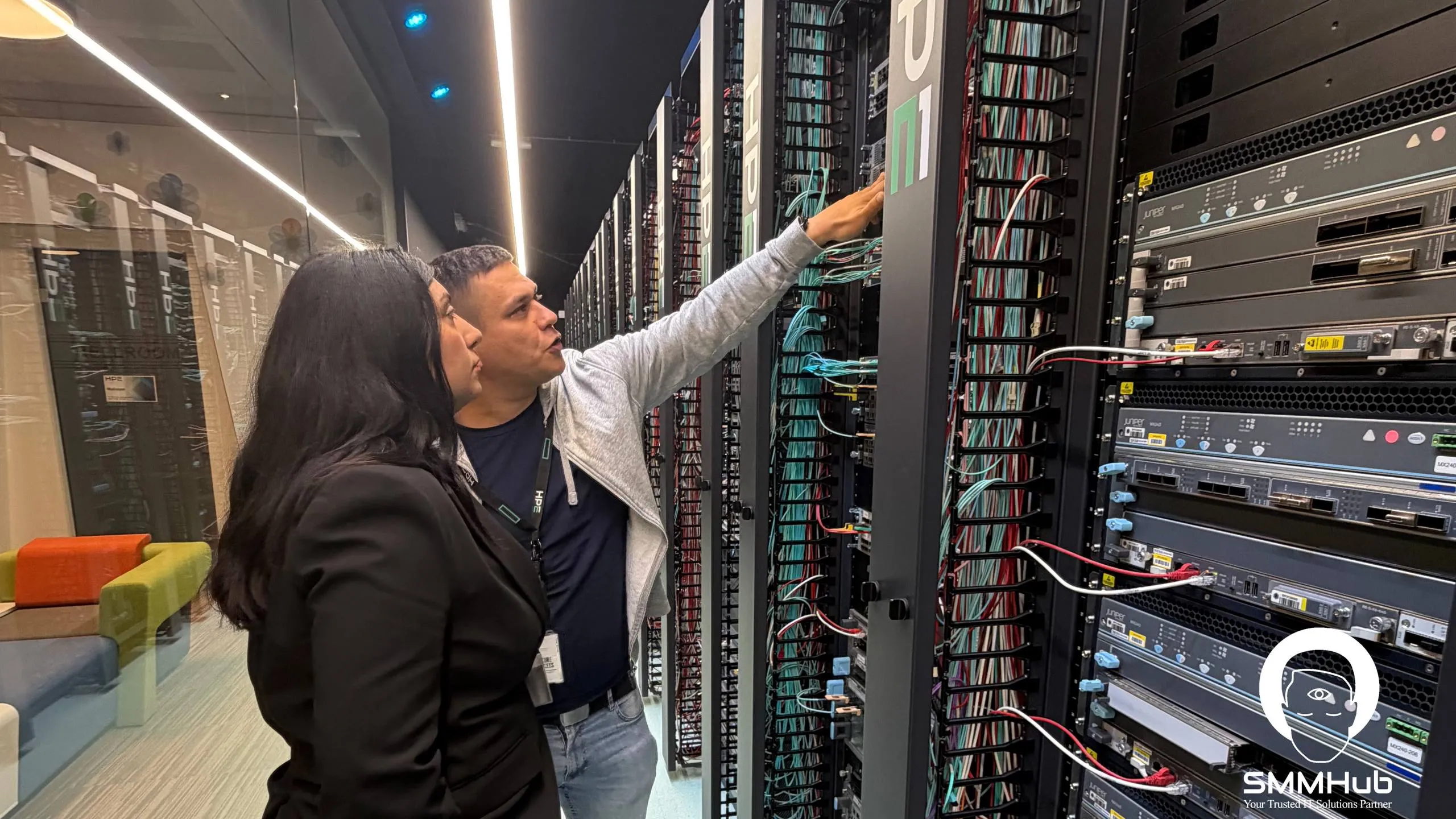
A Vendor Can Be Global. Expertise Must Also Exist Locally.
Imagine two markets.
In both, customers can purchase exactly the same technology.
The same hardware.
The same licenses.
The same software.
The same vendor support.
On paper, their technological capabilities appear identical.
But in the first market, there are engineers who know the technology deeply.
They understand the architecture.
They know how to design it.
They have trained on it.
They have implemented it.
They know what can go wrong.
They know how to troubleshoot it.
They understand how the solution should evolve when the customer's environment grows.
In the second market, the technology is available — but that expertise is scarce.
These are not equivalent technology markets.
Because ultimately, technology is only as useful as an organization's ability to implement and operate it properly.
This is particularly important in enterprise infrastructure.
A network is not something a company simply purchases and forgets.
It becomes part of the organization's operational foundation.
And that makes local engineering capability critical.
This Is Where the Role of an Integrator Changes
There was a time when the role of an IT reseller could be relatively straightforward.
Customer requests a product.
Partner receives a price.
Product is ordered.
Equipment is delivered.
Project completed.
Enterprise IT has moved far beyond that model.
Today, customers increasingly need something different.
They need someone who can stand between:
the customer and the technology,
the local market and the global vendor,
the business requirement and the technical architecture.
That is one of the roles SMMHub aims to develop.
For us, working with a technology vendor should not mean simply having access to a product catalogue or receiving commercial terms.
A meaningful partnership should gradually create something more valuable:
capability.
Capability to understand.
Capability to advise.
Capability to design.
Capability to implement.
Capability to support.
And eventually, capability to develop a stronger ecosystem around the technology itself.
Why Technical Expertise Matters to the Customer
From a customer's perspective, discussions about vendor ecosystems and partner competence can sometimes sound distant from everyday business.
They are not.
Consider a company making a significant infrastructure investment.
The customer may use that infrastructure for five, seven or even more years.
During that period, the environment changes.
The organization grows.
New applications appear.
Security requirements evolve.
Traffic increases.
New offices or branches are connected.
Cloud environments become part of the architecture.
New integrations are required.
The question is therefore not only whether the equipment works on the day it is installed.
The real question is:
Who will understand this environment three years later when the business needs something new?
That is why technical competence surrounding a solution matters almost as much as the solution itself.
For Armenia, This Is a Bigger Conversation
Armenia has strong technical talent.
But the development of an enterprise technology market requires more than talent alone.
It requires continuous exposure to modern architectures.
Vendor education.
Certification.
Real projects.
Hands-on experience.
Knowledge exchange.
Direct communication with technology manufacturers.
And opportunities for engineers to move from understanding individual products to understanding complete architectures.
Every engineer who develops deeper expertise increases the capacity of the entire local market.
Every successful implementation creates experience that can be applied to the next project.
Every difficult technical problem solved locally reduces dependence on expertise located thousands of kilometers away.
This is how an ecosystem develops.
Not overnight.
Engineer by engineer. Project by project. Competence by competence.
The Most Valuable Result of a Technology Partnership May Not Be the Next Order
Orders matter.
Projects matter.
Commercial results matter.
Businesses cannot exist without them.
But there is another way to measure the quality of a technology partnership.
Ask what remains after the project is completed.
Did the customer receive a better infrastructure?
Did the engineers gain new knowledge?
Did the integrator become technically stronger?
Did the vendor understand the local market better?
Can the next project now be implemented at a higher level?
If the answer is yes, then the partnership created something more valuable than revenue from a single transaction.
It created capacity for the next project.

Amsterdam Was the Meeting Point. Armenia Is Where the Work Continues.
Our meeting with Ivan Iashagashvili, Iryna Voblaia and Dmitry Zavelskiy at Juniper Networks in Amsterdam was an opportunity to discuss today's projects.
But more importantly, it gave us the opportunity to look beyond them.
At future opportunities.
At the needs of Armenian customers.
At Juniper Networks technologies and their application in the local market.
At the technical knowledge required around those technologies.
And at how stronger local expertise can support their further development in Armenia.
For SMMHub, this is the direction in which meaningful technology partnerships should evolve.
Not simply:
Vendor → Partner → Customer.
But:
Global Technology → Local Expertise → Stronger Customer Capability.
Because bringing technology into a country is one thing.
Building the knowledge required to use it well is another.
And in the long term, the second may prove even more important than the first.
Amsterdam was the meeting point.
Armenia is where the next chapter continues.